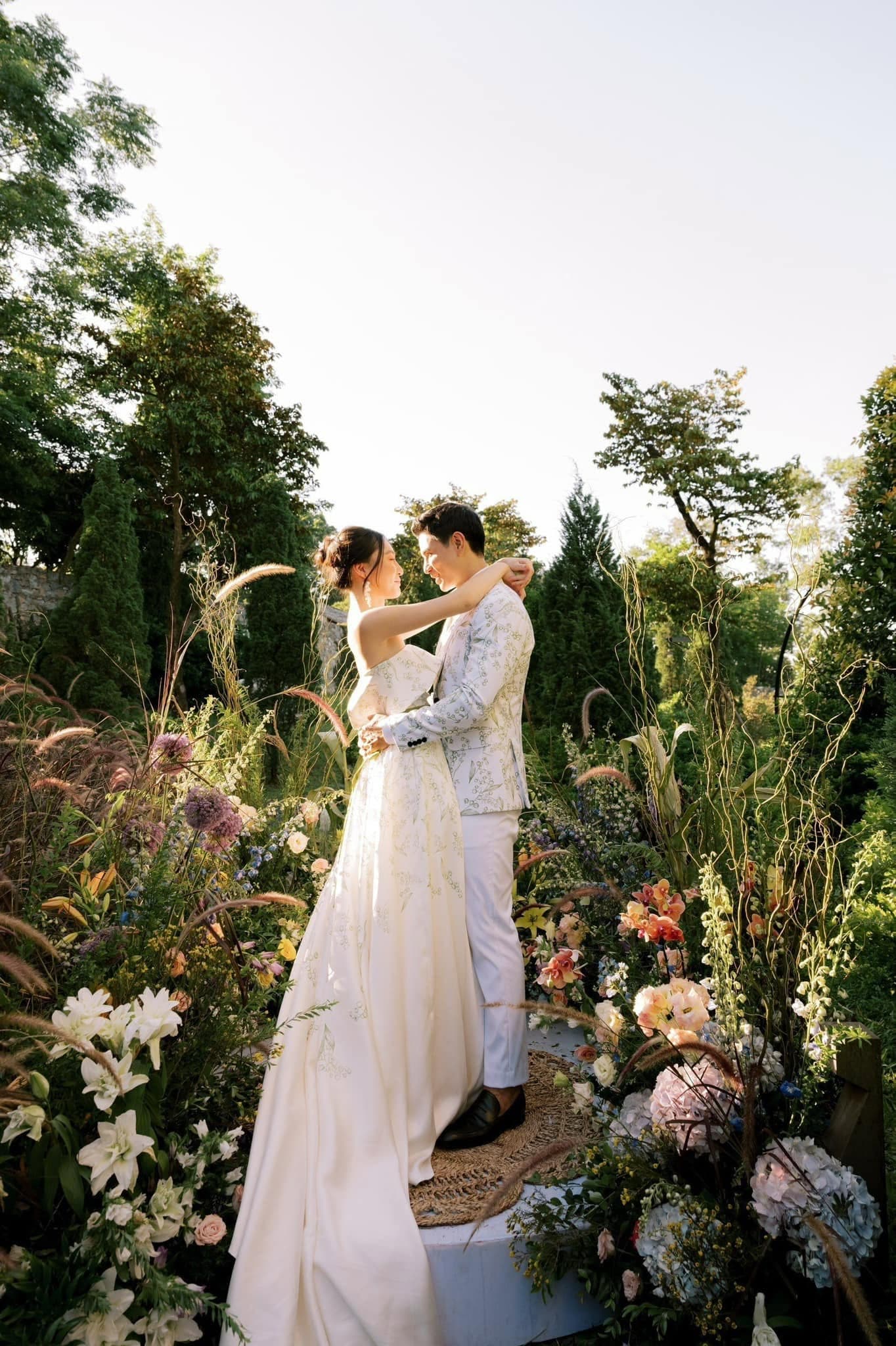
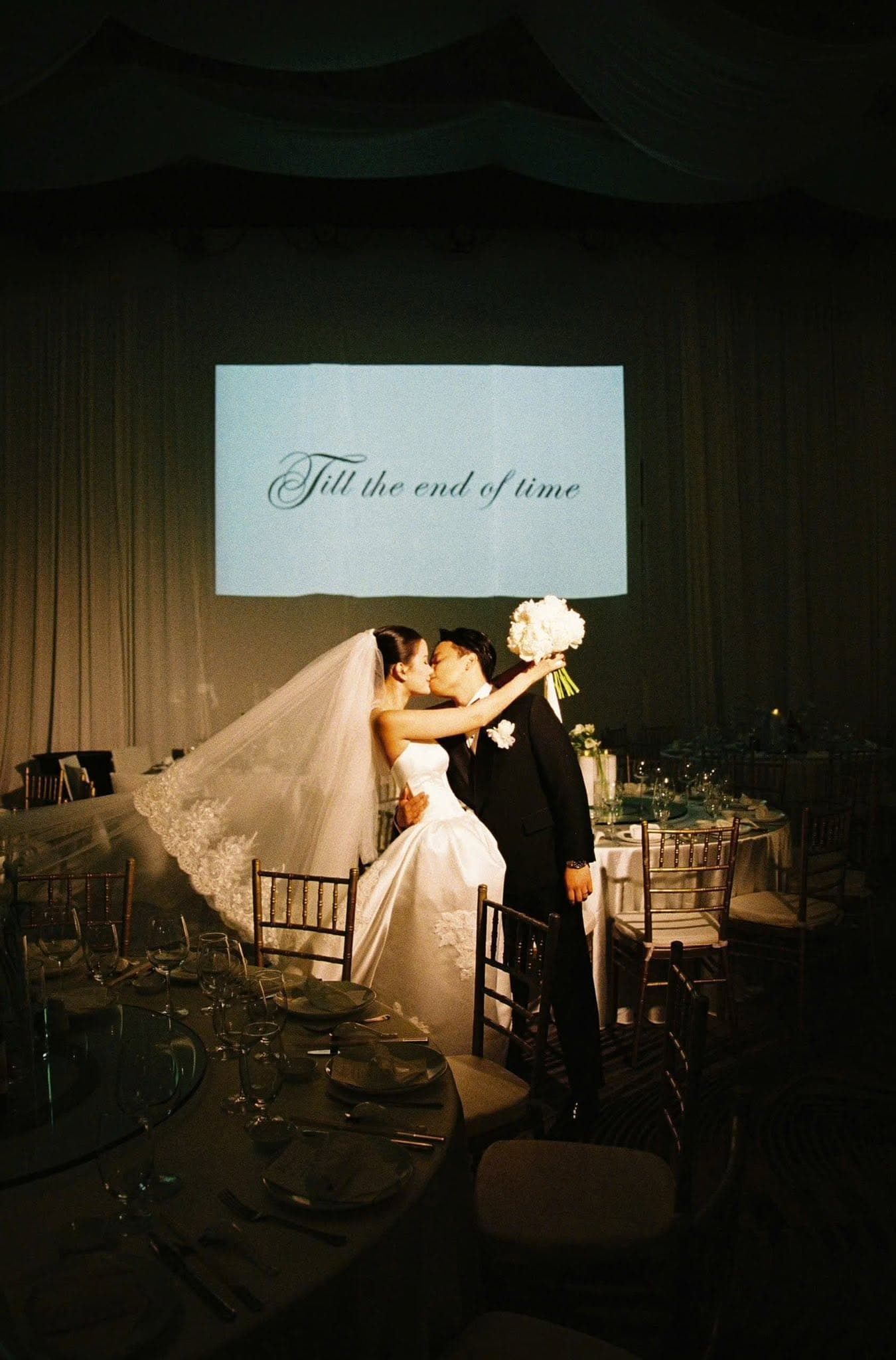
A wedding in white
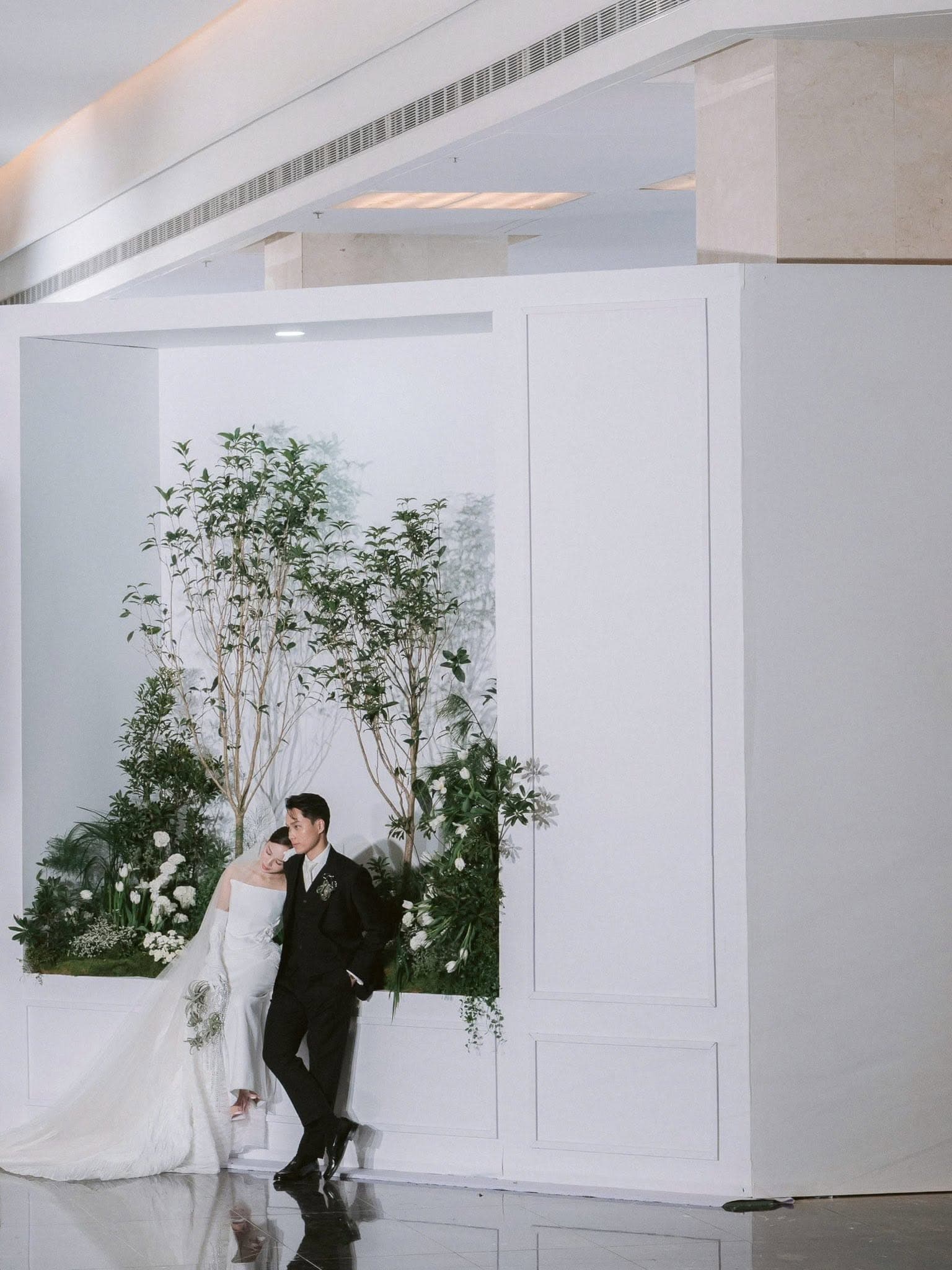
White is not the absence of a palette. It is the most demanding one we work in: with the colour taken away, everything else — texture, light, the distance between two chairs — has to carry the whole room.
- Written by
- Fancy Wedding & Event
- Filed under
- Design notes
- Reading time
- 6 min
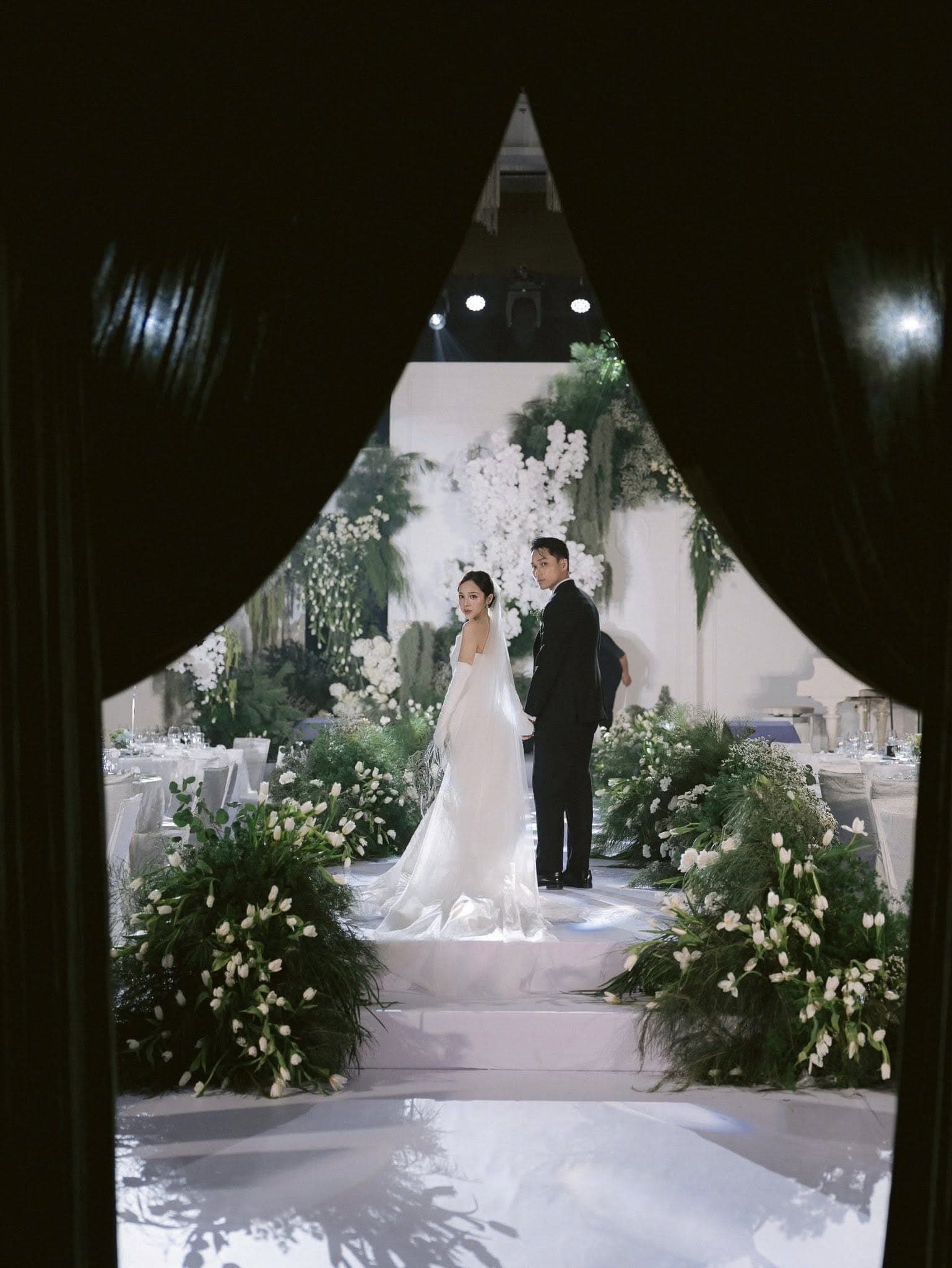
The first thing we ask a couple who wants a white wedding is which white they mean. Chalk, bone, ivory, oyster, the cold blue-white of a gardenia at noon — they are not interchangeable, and a room that holds four of them without deciding reads as undecided rather than serene.
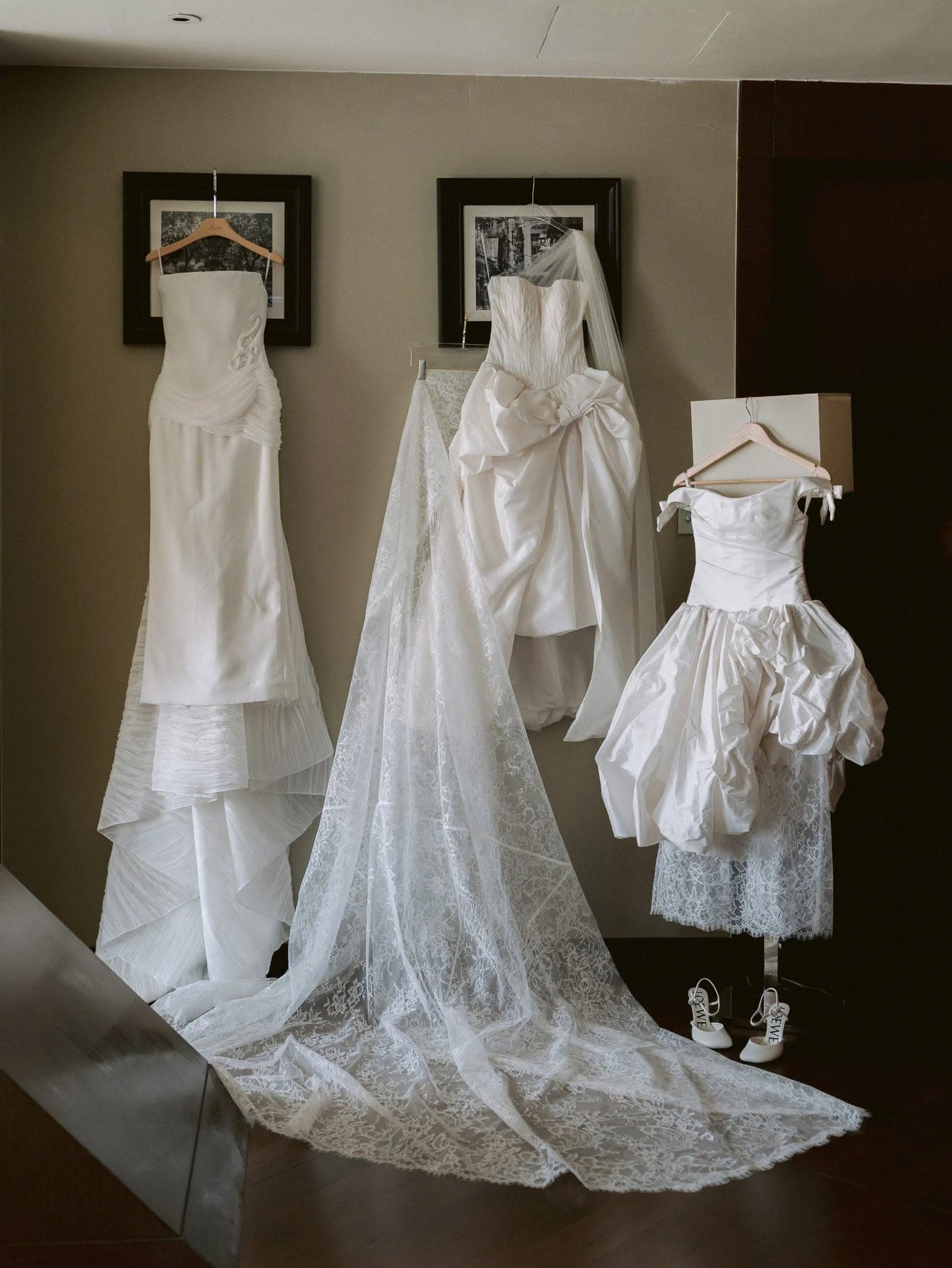
So we choose one, and then we spend the rest of the design arguing with it. A single white, repeated across linen, porcelain and petal, goes flat by the third table. What saves it is texture: raw silk beside glazed ceramic, a matte candle against cut glass, the faint tooth of handmade paper. The eye reads the difference as depth even when it cannot name the cause.
Light does the colouring
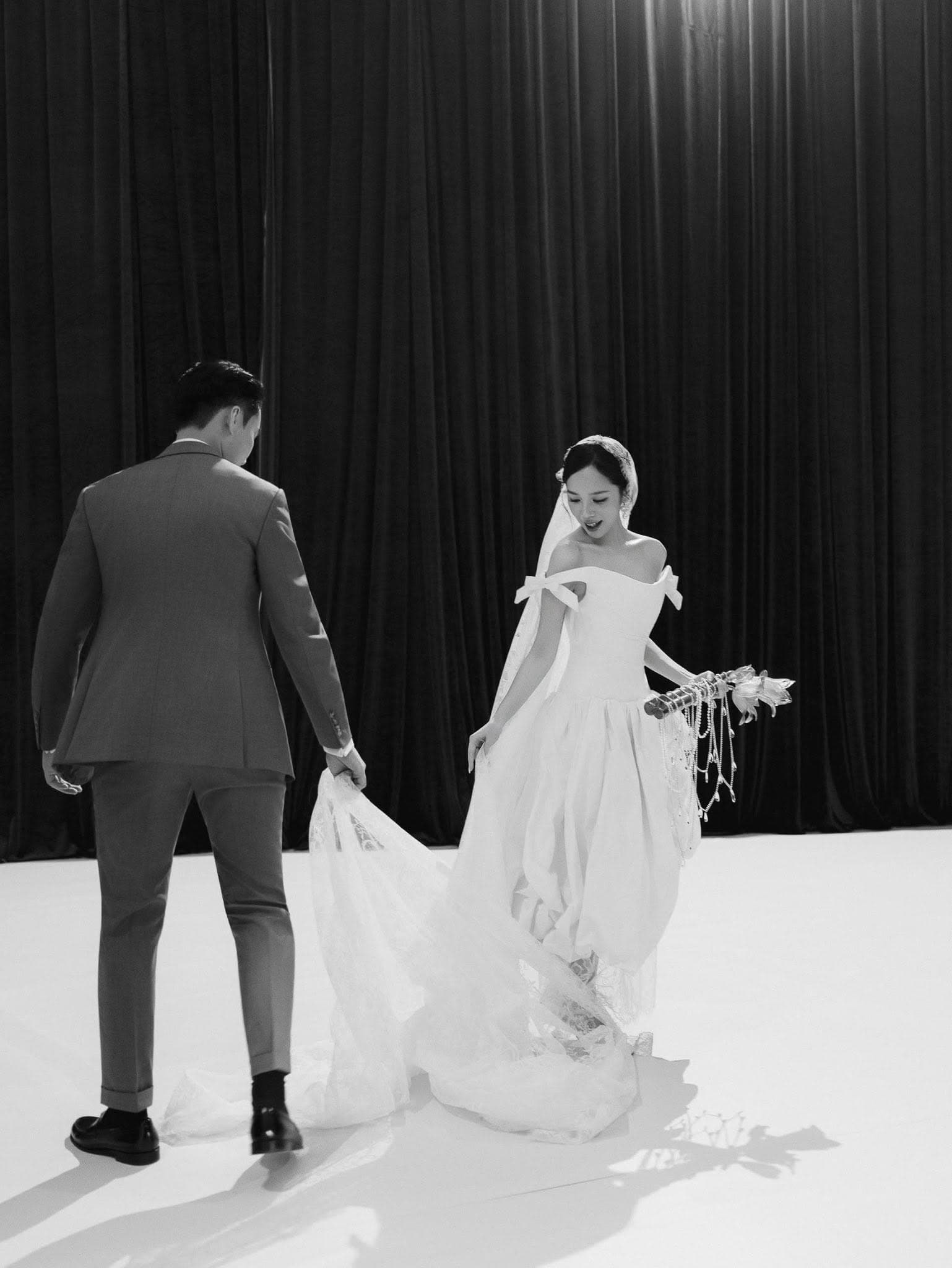
A white room is a screen. At four in the afternoon it takes the gold out of the sky; by seven it has gone blue, and by nine, under candlelight, it is the warm colour of the flame and nothing else. We plan the day around those three rooms, because they are three rooms, and a palette that only works in one of them will fail twice.
Take the colour away and the room starts speaking in texture.
What we hold back
The temptation in a monochrome scheme is to compensate — more stems, more candles, more of everything, until the restraint that made it beautiful is buried under proof of effort. We keep a short list of things we deliberately leave out, and we read it again on the morning of the install.
- No second white until the first one has been used everywhere it can be.
- No florals above eye level at a seated table — a guest should see the person across from them.
- No metallic finish that the candlelight has not been tested against.
- Nothing on the table that has to be moved before the first course.
What is left, when the list has done its work, is a room that looks like it happened by itself. That is the whole trick, and it takes an eight-hour install to pull off.